

FOR HEARING CARE PROFESSIONALS
Hearing in noise is still the hardest problem to solve
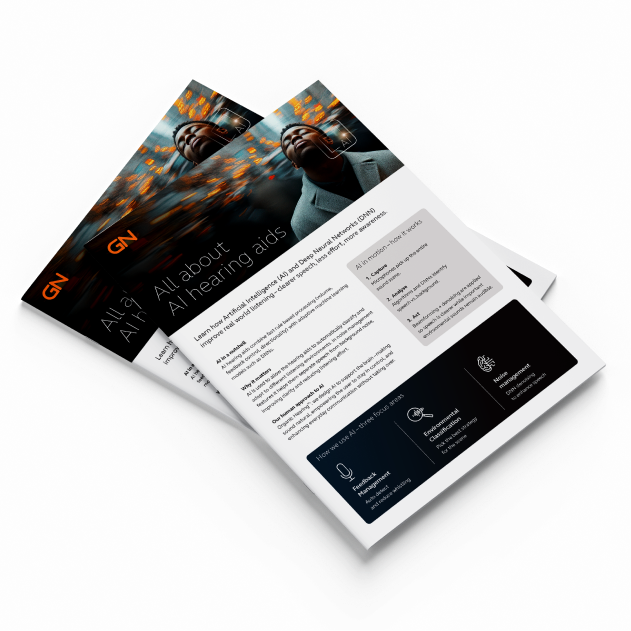
Our most advanced hearing aids combine rule-based processing, environmental classification, and AI.
At the core of modern noise management is Deep Neural Network (DNN) denoising.
It is trained to identify and suppress background noise while preserving speech clarity and a natural soundscape.
Get your copy of the one-pager to understand how DNN supports clearer conversations in real-world noise.
FOR HEARING CARE PROFESSIONALS
Hearing in Noise Is Still the Hardest Problem to Solve
Our most advanced hearing aids combine rule-based processing, environmental classification, and AI.
At the core of modern noise management is Deep Neural Network (DNN) denoising.
It is trained to identify and suppress background noise while preserving speech clarity and a natural soundscape.
Download the one-pager to understand how DNN technology supports clearer conversations in real-world noise.
EXCLUSIVE WEBINAR • 17 JUNE • 2:00-3:00 GMT • REGISTER TODAY
GN hearing aids and the Cocktail party problem:
Does it help more than others?
Join us as we explore how ReSound Vivia’s Intelligent Focus performs in complex multi-talker environments compared with other premium hearing aids.
In this webinar you’ll learn:
• How DNN approaches differ across premium hearing aids
• How Intelligent Focus combines denoising and directionality
• Results from a multi-talker evaluation comparing ReSound Vivia with three leading brands
DATE
Wednesday 17 June
TIME
2:00-3:00 PM (GMT)
WHERE
Live Online Webinar (Microsoft Teams)
PRESENTER

Jan Hereen
Project Manager, Hörzentrum Oldenburg
GN hearing aids and the Cocktail party problem:
Does it help more than others?
Join us as we explore how ReSound Vivia’s Intelligent Focus performs in complex multi-talker environments compared with other premium hearing aids.
In this webinar you’ll learn:
• How DNN approaches differ across premium hearing aids
• How Intelligent Focus combines denoising and directionality
• Results from a multi-talker evaluation comparing ReSound Vivia with three leading brands
We've saved you a seat
DATE
Wednesday 17 June
TIME
2:00-3:00 PM (GMT)
WHERE
Live Online Webinar (Microsoft Teams)
PRESENTER
Jan Hereen
Project Manager, Hörzentrum Oldenburg
EXCLUSIVE WEBINAR • 17 JUNE • 2:00-3:00 GMT • REGISTER TODAY
THE CHALLENGE OF HEARING IN NOISE
Are you being judged on hearing in noise?
Hearing in noise is central to how your patients experience, assess, and ultimately value their hearing care.
Across markets and studies, a consistent pattern emerges: many patients continue to find noisy environments challenging. These difficulties often drive a significant share of follow-up appointments and, if not fully addressed, can influence how consistently patients use their devices.
In this sense, hearing in noise is a key driver of patient satisfaction, day-to-day workload, and long-term engagement with hearing care. As a critical factor in both clinical outcomes and service performance, it deserves focused attention.
#1
The most common complaint of people with hearing loss is difficulty understanding speech in background noise1.
43%
43% cite “they don’t work well in noisy situations” as a reason for not pursuing hearing aid adoption2.
28%
The most common complaint of people with hearing loss is difficulty understanding speech in background noise1. 28% of hearing aid users still are not satisfied with their ability to follow conversations in noise3.
FEATURED RESOURCES
Resources to strengthen clinical outcomes
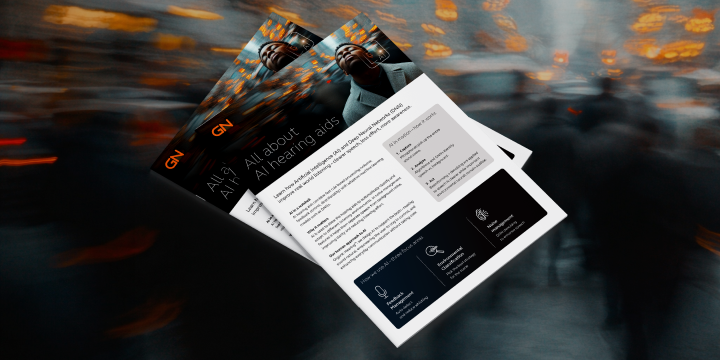
All about AI in Hearing Aids
Understand how AI and DNN technology shape real-world hearing performance.
🔸Explain speech-in-noise performance with confidence
🔸Strengthen trust in your recommendations
🔸Match technology more precisely to patient needs
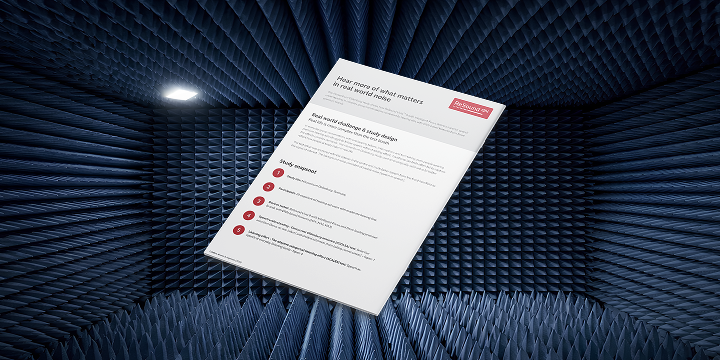
Performance Comparison Study Explainer
Performance of advanced noise reduction strategies in premium hearing aids in complex listening conditions.
🔸Compare performance across leading technologies
🔸Strengthen your clinical recommendations with independent evidence
🔸Choose solutions with greater confidence
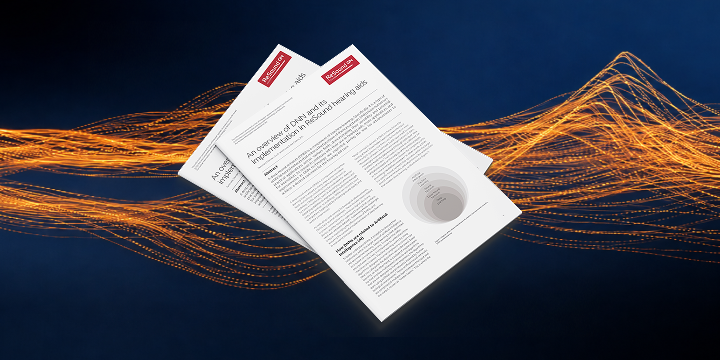
DNN in GN hearing aids
Explore how deep neural networks (DNN) are reshaping hearing aid performance.
🔸Explain AI-driven noise management
🔸Understand how DNN improves speech clarity in noise
🔸Leverage real-world performance insights
TECHNOLOGY AS A SOLUTION
Applying AI technology to patient outcomes
A clear understanding of DNN-based noise management can help set expectations, support informed discussions with patients, and align technology choices with individual needs.



Stronger patient counseling
When speech-in-noise performance is communicated clearly, patients are better placed to set realistic expectations — supporting fewer follow-ups and greater satisfaction.
Confident premium recommendations
Explaining how DNN differs from traditional noise reduction can provide additional support for your recommendations and help you frame conversations about premium solutions.
Better technology-to-lifestyle matching
Using DNN effectively can help align technology choices with patients’ lifestyles, supporting satisfaction and long‑term engagement.
Proven hearing‑in‑noise performance
Hearing in noise remains one of the most demanding everyday listening situations. It is also where differences between technologies often become most apparent. The solutions you select can impact on how people experience their hearing in these environments.
Independent testing from Hörzentrum Oldenburg evaluated premium hearing solutions in complex, multi‑talker listening environments designed to reflect real‑world conversations. The results show that GN’s premium hearing solutions provide strong performance compared with other premium technologies.
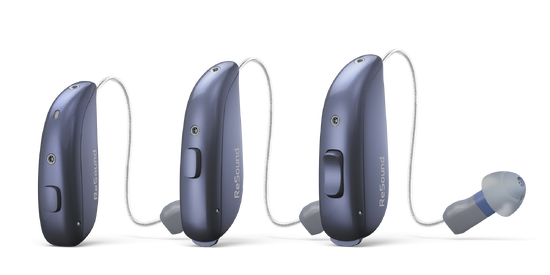
GN continues to develop hearing solutions focused on challenging listening environments and on supporting better hearing experiences for the people you serve.
Connect with our team if you would like to explore these solutions in more detail.
a) Quilter, Heeren & Jespersen (2026)
b) Groth & Cui (2023)
c) Jespersen et al. (2024);
1) National Institute of Health and Care Excellence (2018)
2) EHIMA Marketrak (2022)
3) MarkeTrak (2022)
General information
GN Hearing A/S - Lautrupbjerg 7 - 2750 Ballerup - Denmark | 2026 GN Hearing, All Rights Reserved.